Formalising practice to promote welfare and high quality science
The use of animals in experiments and testing is governed under the Animals (Scientific Procedures) Act 1986 (ASPA), which is regulated by the Home Office.
Under ASPA, animal research is only permitted at a licensed establishment, the experiment must be part of a licensed project and the investigator performing the work must have their own personal licence and must be competent in the procedures being used. Permission to work with animals is granted by the Home Office by licence only under very specific conditions.
The decision to support and proceed with mouse research at the Mary Lyon Centre is taken after extensive consultation and ethical review overseen by the Animal Welfare and Ethical Review Body (AWERB), which includes opinions from scientific, veterinary, and animal care staff as well as lay people. The primary aim of the AWERB is to develop and formalise good practice at MRC Harwell in the promotion of animal welfare and high quality science deriving from their use.
The AWERB also aims to add value to the scientific and ethical dialogues surrounding the use of animals and the assessment and reduction of risk at this establishment, offering a local framework for delivering high standards of accommodation and care. It does so according to the principles of better regulation outlined in Guiding Principles on Good Practice for Animal Welfare and Ethical Review Bodies (4th edition), a report by the RSPCA Animals in Science Department and LASA Education, Training and Ethics Section (RSPCA and LASA, 2026; M. Jennings ed.). The PDF document is available for download from the RSPCA Ethical Review webpage and the LASA Resources webpage.
The Mary Lyon Centre is proactively committed to the principles of the 3Rs – the refinement, reduction, and replacement of the use of animals in research. All licence holders must adhere to these principles and the AWERB discusses them when considering any project licence application. In addition, we have frequent Named Persons meetings between our Named Animal Care & Welfare Officers, Named Veterinary Surgeon, Named Training & Competency Officers, Home Office Liaison Contact, Establishment Licence Holder, and Named Information Officer. These involve discussions of all aspects of welfare, led by the Named Animal Care & Welfare Officers, and provides an opportunity to share initiatives or highlight areas that require more exploration. This also enables the group to identify training requirements of our staff and develop technical expertise with animal welfare being the leading factor.
In recent years, we have:
- Invested in and developed home cage monitoring systems to allow in-depth data to be collected in an automated manner without disturbing the animals;
- Piloted the use of long-read sequencing to provide faster and more robust characterisation of genome-editing experiments that reduces the number of false-positive founders carried forward for breeding;
- Contributed to the development of the LAG-R (Laboratory Animal Genetic Reporting) framework, which is a set of guidelines to support more complete documentation of the genetic make-up of animals with the aim to enhance research reliability and reduce wastage of resources and animals;
- Reduced the number of live mice exported from our National Mouse Archive by developing improved methodologies and providing training that enables shipment of cryopreserved sperm and embryos;
- Chaired and hosted a Best Models Working Group to discuss and compare different model systems, including other animals (such as flies and frogs), advanced in silico systems, and new cellular platforms
- Developed ex vivo culture systems to allow greater use of tissue from complex strains modelling disease
- Grown our efficient and proactive cryopreservation service, the National Mouse Archive, enabling the UK biomedical community to preserve their strains without the need for continuous breeding
Facts and Figures
Every year, we (and all other organisations performing animal research in the UK) must report to the UK Home Office how many animals have been used in scientific procedures. These are published annually and can be accessed on the Home Office website.
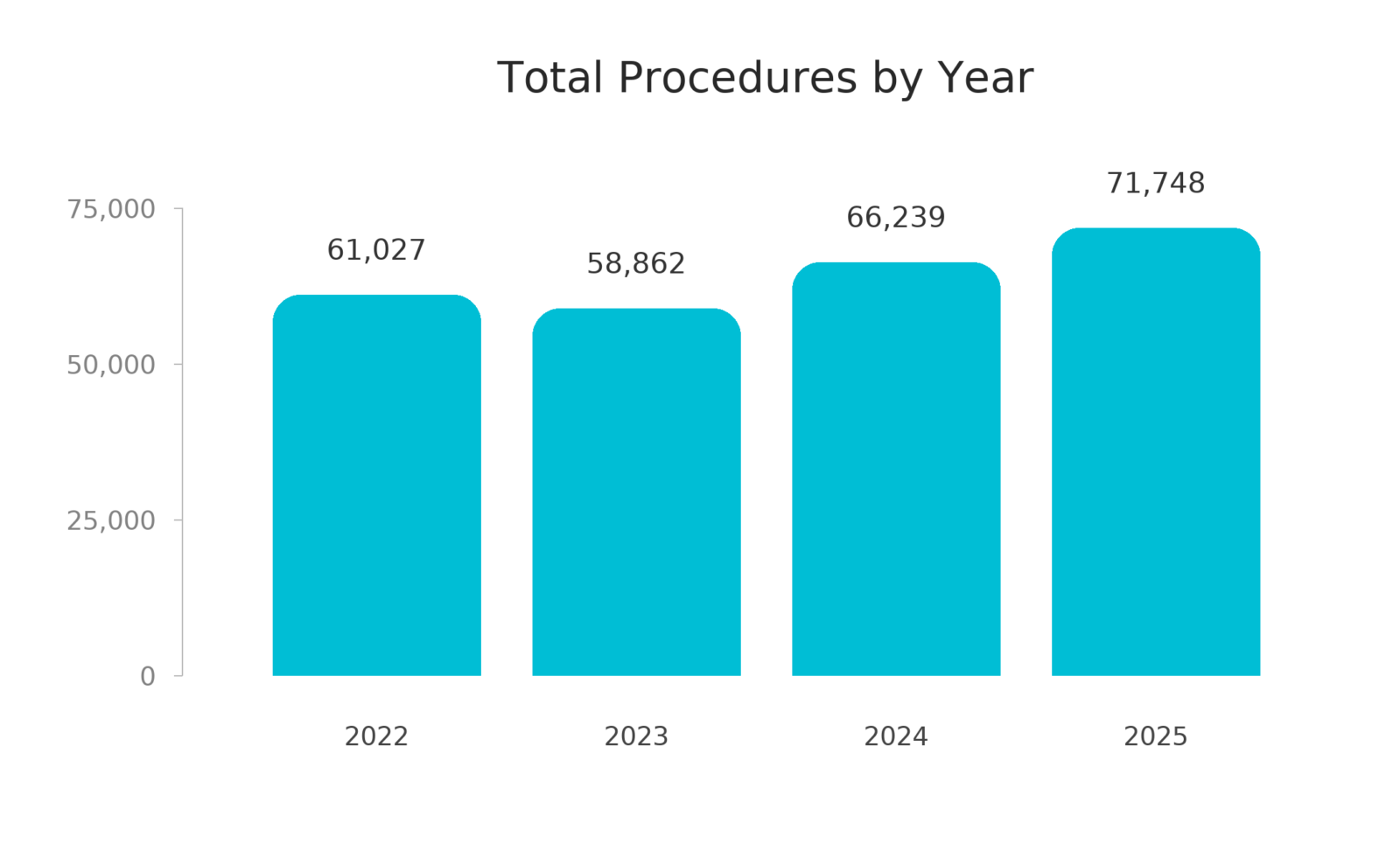
Specifically, we must report the numbers of animals that have undergone procedures for scientific purposes where they may have the effect of causing an animal pain, suffering, distress or lasting harm. This includes the breeding of genetically altered mice, where each offspring born is counted as an individual procedure.
The graph below shows the numbers of procedures reported each year since 2022.
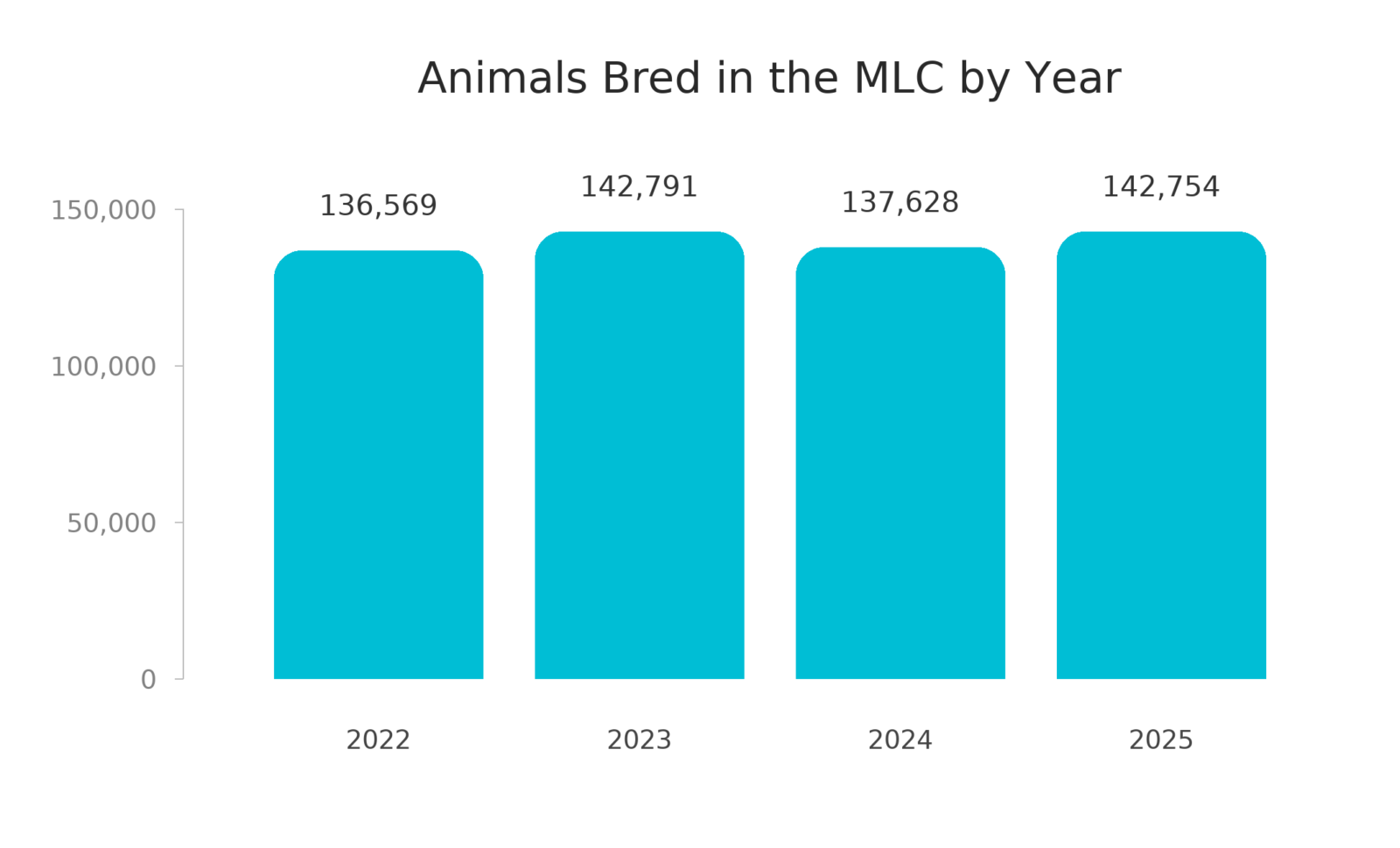
The total number of mice bred at the MLC also includes wild type animals (i.e. mice not carrying genetic alterations) that have been bred during the course of the year, but haven’t undergone a scientific procedure as defined above (e.g. wild type breeders, males from litters where the females were required for their embryos, but the males were not needed, and wild type animals only used for tissue collection that could be done in a way that doesn’t cause any pain, suffering, or distress).
Severity
As well as reporting overall numbers of animals undergoing scientific procedures, we must report severity levels, i.e. the level of suffering experienced by each animal. The donut chart below shows the numbers (and percentages) of reported procedures that fell into the 5 severity classifications (Sub-threshold, Mild, Moderate, Severe, and Non-recovery – see examples further below) for 2025:
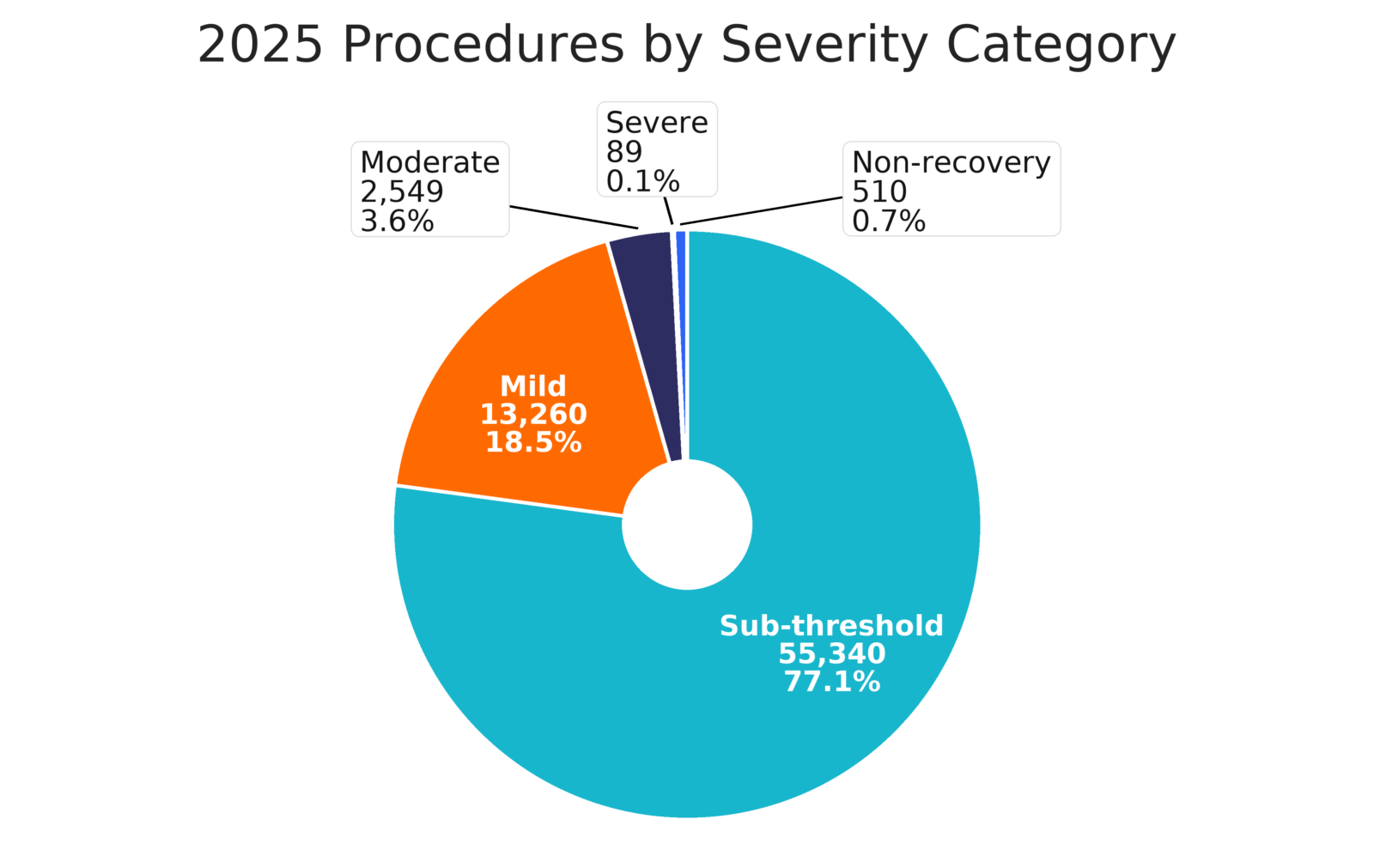
Sub-threshold procedures include breeding of genetically altered animals without a harmful phenotype or dosing with a compound in their normal feed with no consequences of the dosing.
Mild procedures include anaesthesia, non-invasive imaging, taking a blood sample, short-term social isolation, or superficial non-surgical procedures (e.g. ear biopsies).
Moderate procedures cause short-term moderate pain, suffering, or distress or long-lasting mild pain, suffering, or distress and include invasive surgery under general anaesthetic, cancerous tumour growth where it impairs normal behaviour, or breeding genetically altered mice where their health is affected (e.g. in a model of diabetes).
Severe procedures cause a major departure from the animal’s usual state of health and wellbeing with short-term severe pain, suffering, or distress or long-lasting moderate pain, suffering, or distress.
Non-recovery procedures are those performed entirely under general anaesthesia from which the animal shall not recover consciousness.