Mouse research at the Mary Lyon Centre only proceeds when there is a pertinent clinical need for the research, a gap in scientific knowledge, and no other model system can be used (such as cell, tissue, organoid, or computational models). Our animals are used to further our understanding of a wide range of diseases (from cancer to dementia) through our role as the hub of the MRC National Mouse Genetics Network and in partnership with many other colleagues and organisations around the world.
Every year, we (and all other organisations performing animal research in the UK) must report to the UK Home Office how many animals have been used in scientific procedures. These are published annually and can be accessed on the Home Office website.
Specifically, we must report the numbers of animals that have undergone procedures for scientific purposes where they may have the effect of causing an animal pain, suffering, distress or lasting harm. This includes the breeding of genetically altered mice, where each offspring born is counted as an individual procedure.
As we are committed to openness and transparency about our use of animals, we also share these numbers on our website and are now sharing our 2025 numbers.
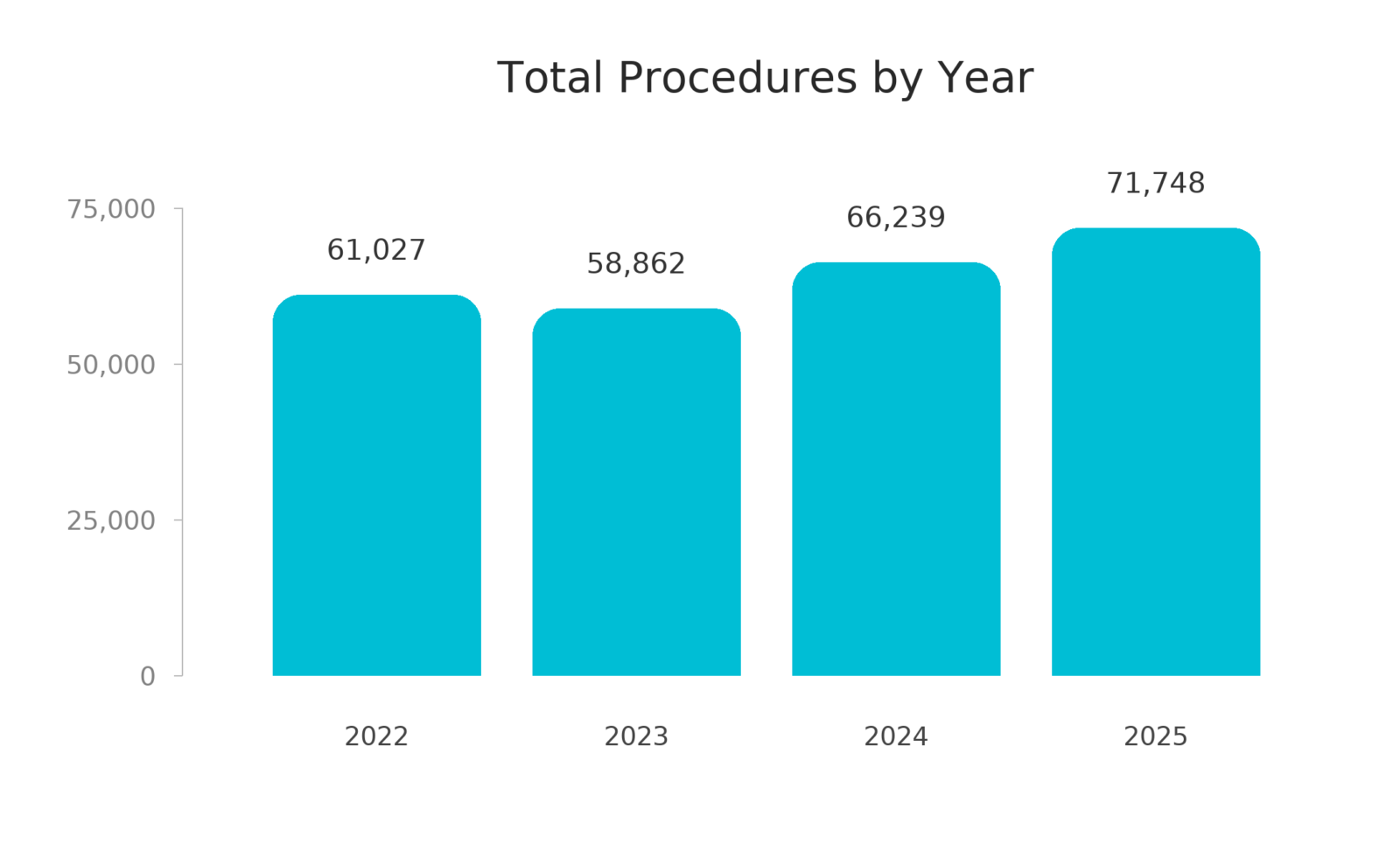
The graph below shows the numbers of procedures reported each year since 2022.
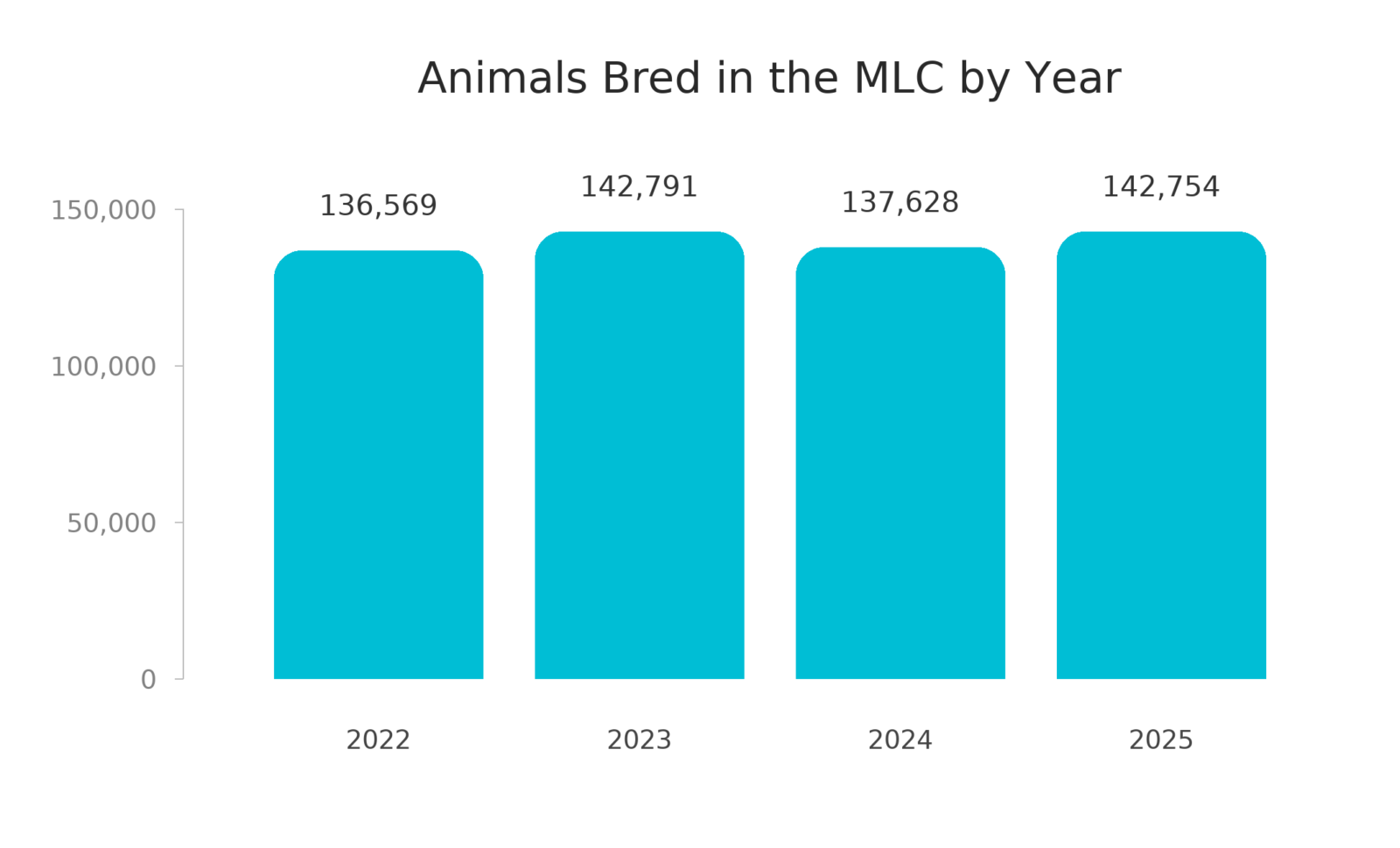
The total number of mice bred at the MLC also includes wild type animals (i.e. mice not carrying genetic alterations) that have been bred during the course of the year, but haven’t undergone a scientific procedure as defined above (e.g. wild type breeders, males from litters where the females were required for their embryos, but the males were not needed, and wild type animals only used for tissue collection that could be done in a way that doesn’t cause any pain, suffering, or distress).
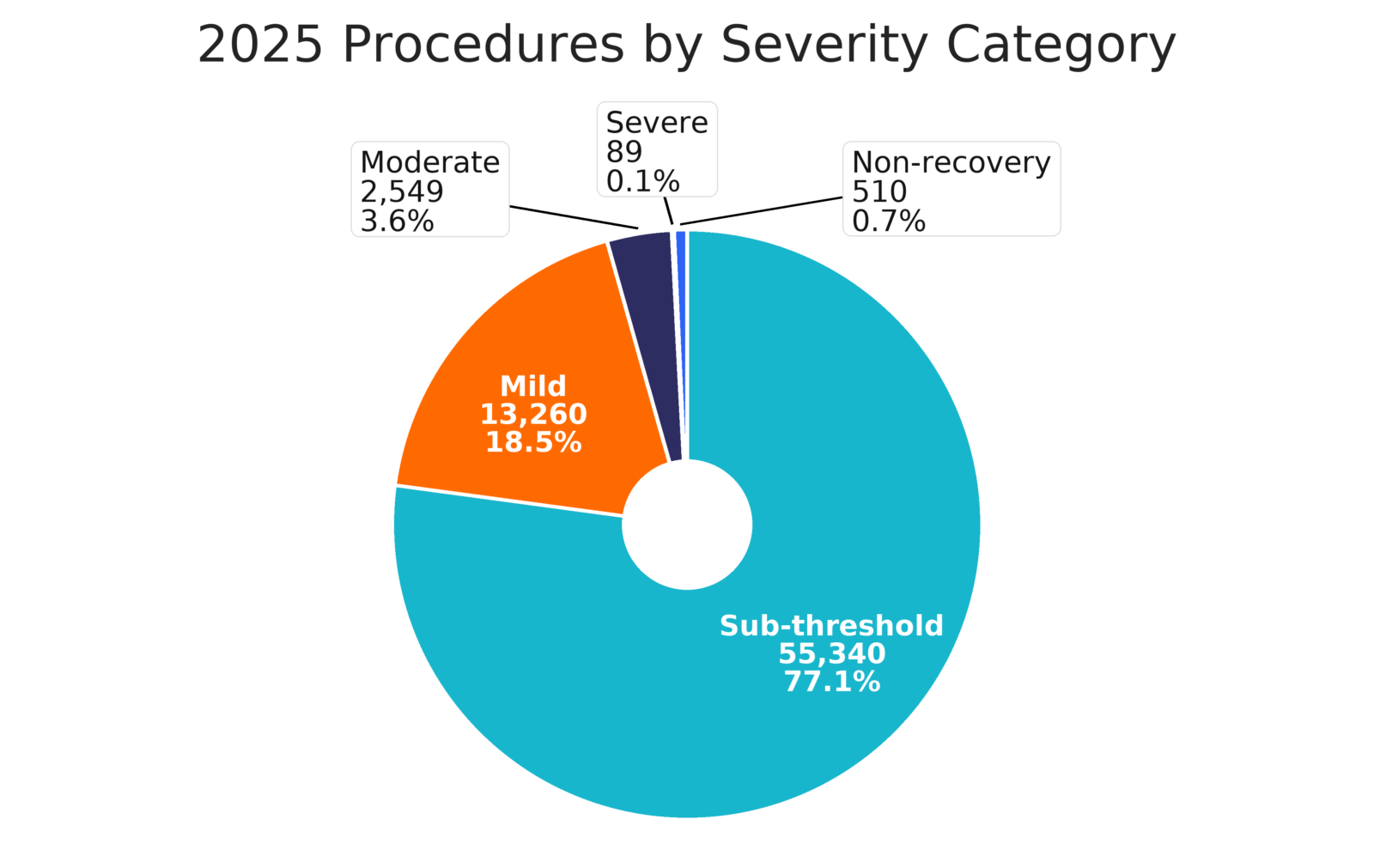
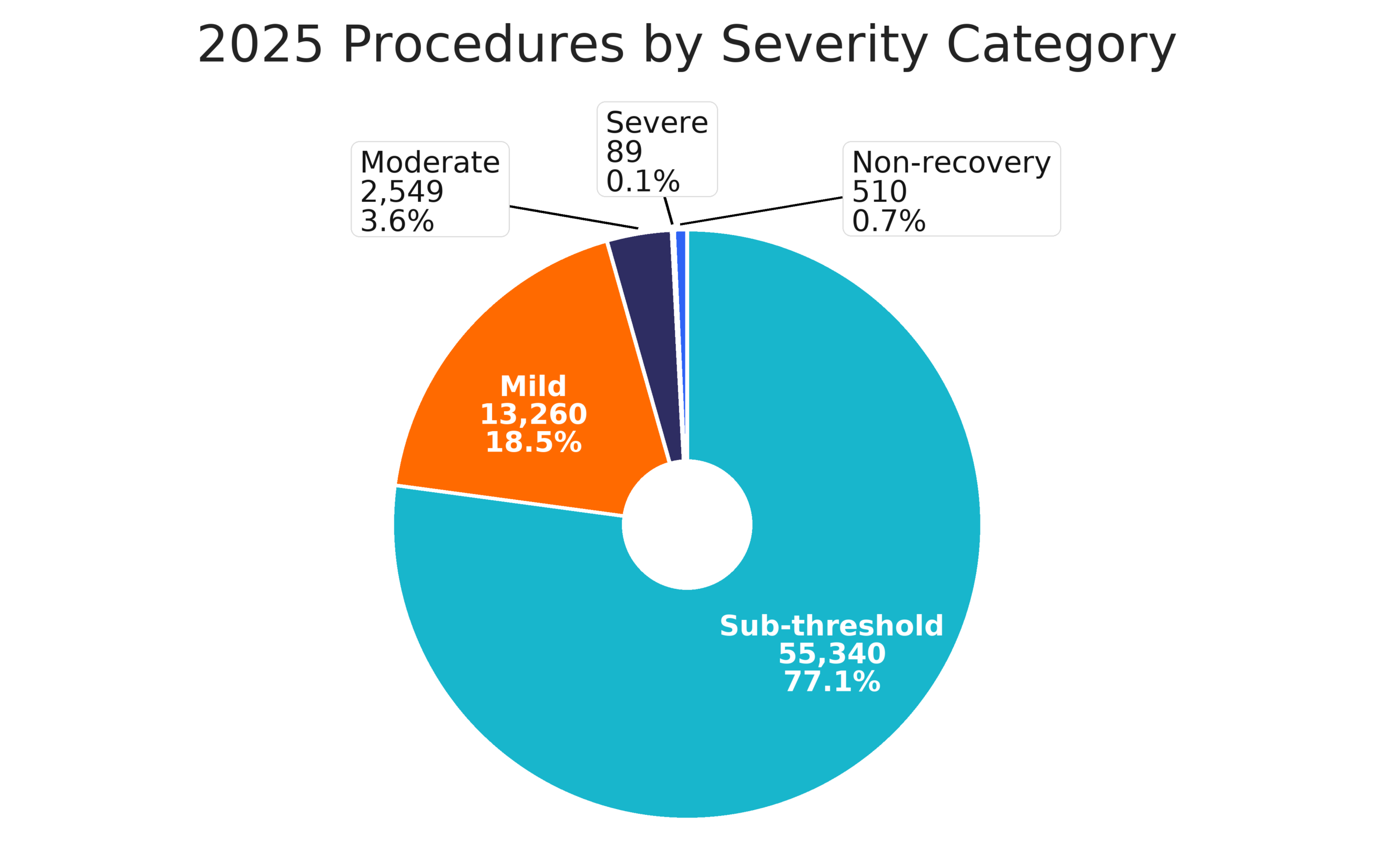
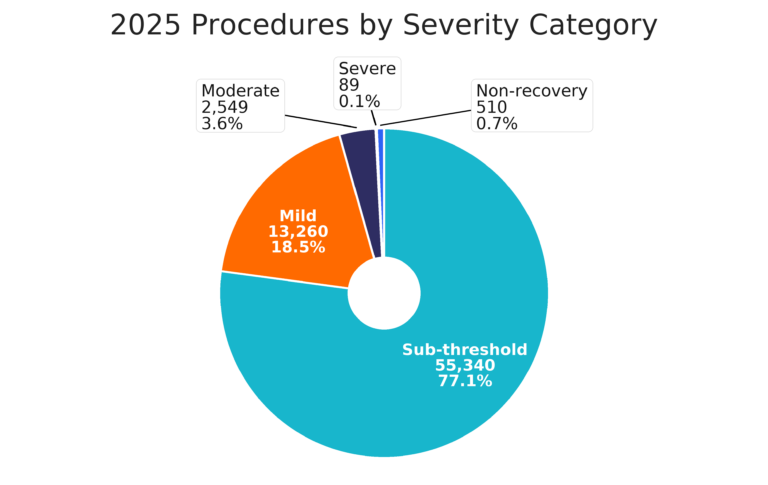
As well as reporting overall numbers of animals undergoing scientific procedures, we must report severity levels, i.e. the level of suffering experienced by each animal. The donut chart below shows the numbers (and percentages) of reported procedures that fell into the 5 severity classifications (Sub-threshold, Mild, Moderate, Severe, and Non-recovery – see our Licensing and Ethical Review page for examples of the procedures that fit into each category) for 2025: